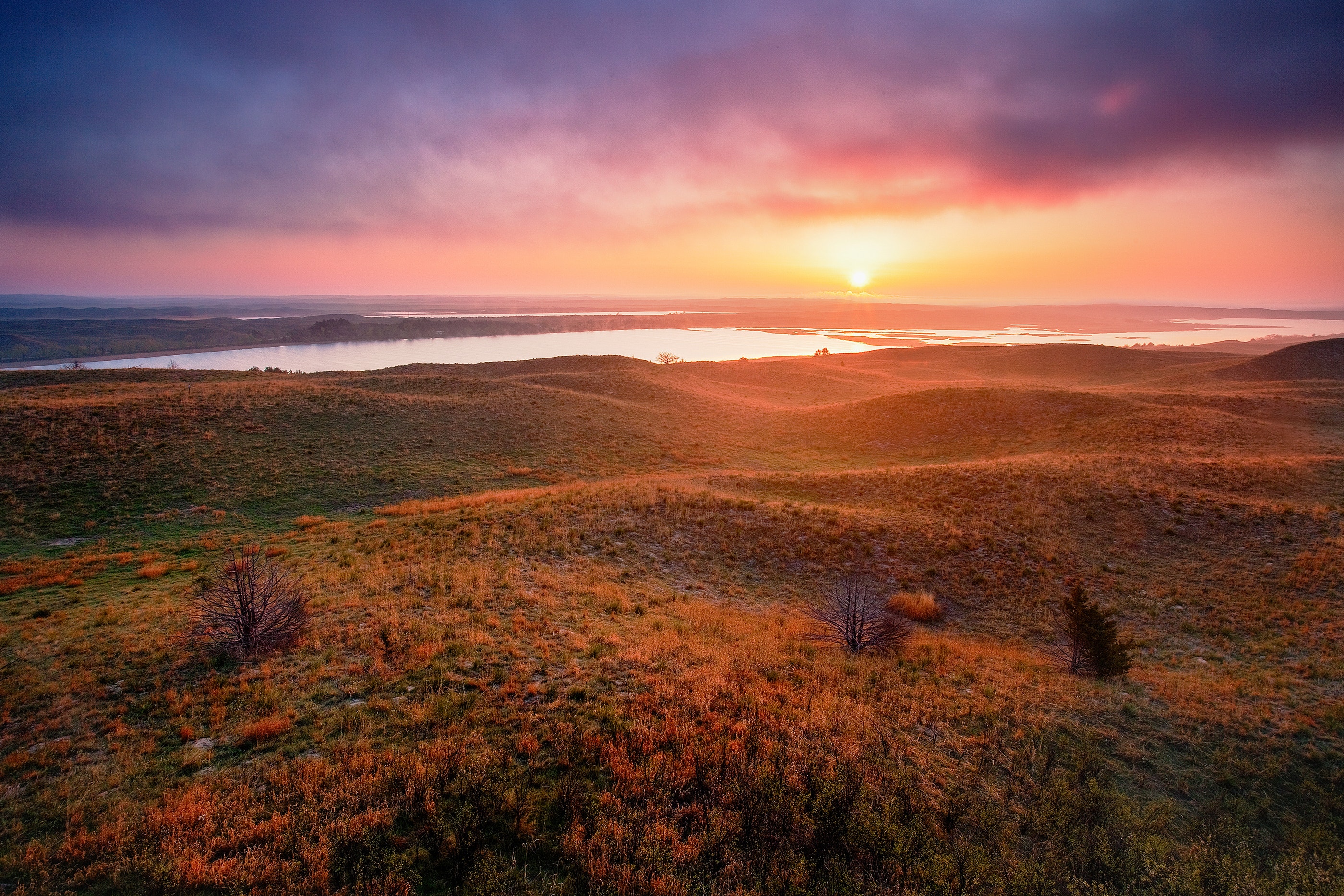
It’s hard to imagine North America without grasslands. From the Great Plains to the Chihuahuan Desert, patchworks of grasses, wildflowers, and sedges carpet vast landscapes, laying the literal groundwork for unique communities of plants, animals, and people.
People write off the prairie as “flyover country,” says Alison Holloran, former executive director of Audubon Rockies. “But if you step out and step into it, it is such an ecologically diverse and rich place.”
Despite its vitality, this majestic ecosystem is in trouble. Development, agriculture, and invasive species have destroyed more than 300 million acres of prairie on the plains since European colonization. Today, native grasslands cover less than 40 percent of their historic span. These devastating habitat losses spell havoc for grassland birds, which have seen a 43 percent decline since 1970, the most of any avian group in North America.
All is not lost, however. Thanks to preservation, restoration, and sheer immensity, extraordinary horizon-spanning prairies persist. To get a sense of the plains of yesteryear and a vision of a grassland-friendly future, try visiting these oases.
Expansive on its own, the Valentine refuge is but one entry point to the sprawling Nebraska Sandhills, some 12 million acres of what the writer Jim Harrison called “without a doubt the most mysterious landscape in the United States.” The world’s most intact temperate grassland, the Sandhills cover North America’s largest field of sand dunes, between which nestle hundreds of shallow lakes and more than 1 million acres of wetlands. The results are awe-inspiring views of endless rolling prairie and ideal breeding habitat for many waterfowl and grassland birds. Along with two short walking trails, the refuge offers a nine-mile gravel drive for wildlife viewing, as well as blinds that visitors can reserve to watch the dazzling mating displays of Sharp-tailed Grouse and Greater Prairie-Chickens.
Nachusa Grasslands
Location: Illinois Size: 4,100 acres Standout species: Henslow’s Sparrow More than 96 percent of North America’s tallgrass prairie has been destroyed, but dense fields of grass wave on at Nachusa Grasslands. Located just two hours outside of Chicago, the restored grassland—owned and operated by The Nature Conservancy—is nearly indistinguishable from the prairies of old, boasting more than 700 species of native plants and a herd of bison to boot. Paved roads provide easy access to all five of Nachusa’s trails; hike the Clear Creek Trail for the most immersive prairie experience. Wildflowers and grassland breeders peak from spring through midsummer, but consider visiting in autumn to experience a subtle rainbow of grasses.
Carrizo Plain National Monument
Location: California Size: 250,000 acres Standout species: Prairie Falcon Though California may be better known for redwood forests and deserts, grasslands are among the state’s largest ecosystems. Nowhere is this more evident than Carrizo Plain, a roughly 50-mile-long strip of prairie running down the San Andreas Fault east of San Luis Obispo. Following springtime rains, wildflowers paint the prairie in resplendent purples and yellows, making mid-March to mid-April the perfect time to hike the monument’s trails—but make sure your vehicle can handle muddy roads. Bring water, too, as it cannot be purchased at the monument, which covers about half the length of the plain. Later in the season, the grassland will be hewn short by giant kangaroo rats, an endangered species endemic to California. For a break from the prairie, reserve a trip to Painted Rock, a cave within the monument’s boundaries that contains ancient Native American rock art.
American Prairie Reserve
Location: Montana Size: 605,700 acres Standout species: Chestnut-collared Longspur Glacier National Park may steal the spotlight in Montana, but for grassland lovers, American Prairie shines just as bright. Founded in 2001, this ambitious array of public and private lands protects an enormous expanse of pristine shortgrass prairie, the durable ecosystem that dominates the rain shadow of the Rocky Mountains and provides habitat for pronghorn and prairie dogs. American Prairie’s remote location is both a blessing and a curse: Before you enter the endless miles of grassland, ensure you have all the food, water, and gasoline you will need for a full day—and don’t forget that the weather can be unpredictable during the peak summer season. Several of American Prairie’s most breathtaking locations, such as Sun Prairie and the PN property, can only be accessed by all-wheel-drive vehicles, so make sure to stop by the National Discovery Center in Lewistown to learn which destination is right for you.
Grow Your Own Prairie Patch
Birds and other wildlife need grassland habitat with plenty of elbow room, but even a small garden of native prairie plants can have a big impact.
Manage moisture. Prairie plants are tough: Many are adapted to survive drought, floods, or both. Replacing even a small area of thirsty turf grass with hardy native plants can help reduce water use. When heavy downpours arrive, a rain garden with prairie plants can absorb water to ease flooding and replenish groundwater.
Boost bugs. Milkweed and other prairie plants provide essential food and shelter for a variety of insects, including migrating butterflies and moths, says Chris Helzer, The Nature Conservancy’s director of science and stewardship in Nebraska. Your small native garden can help stem insect declines, which in turn helps to support birds that eat them. If enough of your neighbors follow your lead, he says, “Now you’ve basically got an ecosystem.”
Nudge neighbors. “Our biggest challenge in prairie conservation is that the public doesn’t know anything about prairies,” Helzer says. But when passersby see gorgeous flowers like black-eyed Susan or wild bergamot in your yard, they’ll begin to appreciate the beauty of grasslands—and may decide to plant some of their own. —Andy McGlashen
Attwater Prairie Chicken National Wildlife Refuge
Location: Texas Size: 10,500 acres Standout species: Greater Prairie-Chicken (Attwater’s subspecies) As the name suggests, the critically endangered Attwater’s Greater Prairie-Chicken is the biggest avian draw for this refuge. But the chickens are here for the coastal prairie: a rare ecosystem found only along the western Gulf Coast that is typified by relatively heavy rainfall and wet clay soil. The Boomin’ and Bloomin’ Festival, held annually in early April, is a great time to see the refuge’s eponymous species, but you can take the four-mile auto tour loop or hike the property’s two trails for panoramic views of the lush grasses at any time of year. The refuge is located just an hour’s drive from Houston.
Badlands National Park
Location: South Dakota Size: 242,700 acres Standout species: Upland Sandpiper Best known for its otherworldly rock formations, Badlands also hosts one of the country’s largest remaining mixed-grass prairies. Most visitors explore the park in July and August; to beat the crowds, try visiting in early June, when the grassland is lush and verdant, or in drier September. The park charges a $30 entry fee for private vehicles (valid for seven days). Once inside, several scenic drives such as the Sage Creek Rim Road and Badlands Loop Road offer prairie views as far as the eye can see—except when those pesky buttes get in the way. While in the Rapid City area, don’t miss Wind Cave National Park, which contains another impressive prairie in addition to its remarkable cave system.
A version of this story originally ran in the Summer 2026 issue as “Wide-Open Spaces.” To receive our print magazine, become a member bymaking a donation today.