
Traversing the State to Unite Our Chapter Flock
A year of travels across California to learn about our incredible chapter network


By Rachel Bailey
Community Building Manager, Audubon California (she/her)
Published December 17, 2025
This article is from Audubon California
. Find Audubon near you here.
As the most biologically diverse and most populated state in the nation, California presents unique opportunities for community conservation work, along with unique challenges. Woven along the coast are an array of habitats, from sandy shorelines and tide pools, to dense port cities, wetlands, and sheer cliffs. Northern California is full of mossy redwood forests, roaring rivers with important spawning grounds, and the Cascade mountain range with geologically recent volcanic activity. The highest and lowest point in the contiguous United States both sit in California with under 100 miles between them, thanks to the dramatic incline of the eastern Sierra Nevada mountain range. And to the east and south of the Sierras are three distinct desert regions each with their own plant and animal communities.
This spread of habitat types allows more plant and animal species to thrive, and right alongside the flora and fauna live more people than any other state. In such a huge, diverse place, how can we best support each other and coordinate our efforts to protect birds? This year, I started my journey to find out.
This past March, I started a new role within Audubon California as the Community Building Manager. My role is to link together the state’s 48 independent chapters with each other, with the state office’s programs and initiatives, and with other conservation organizations and agencies. I began by meeting flock members where they are - to listen, learn, and start connecting the dots of the impact happening across California.
A Grand Tour of Our Great State
In April, I set out for the Central Coast where Morro Coast Audubon Society manages the Sweet Springs Nature Preserve, Monterey Audubon Society monitors black oystercatcher territories, and Ventura Audubon Society counts snowy plover eggs hidden in small sandy "scrapes" along the shore. It was interesting to walk along the beach—a place that I usually associate with rest and relaxation—and talk to these conservation organizations about historic pollution, or offshore energy, or rocket launches in the context of bird population health. The coast might be solely a vacation spot for many, but these groups are working hard behind the scenes so that people and birds alike can exist and relax.
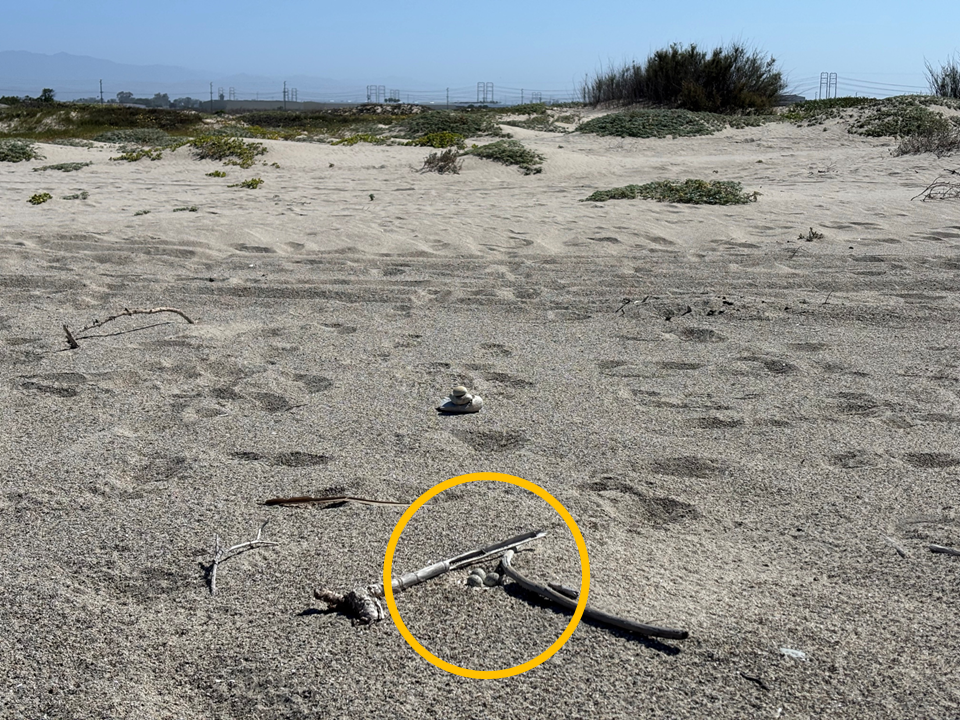
Before the heat of summer set in, I had an opportunity in May to head towards the Central Valley. There, Kern Audubon Society is advocating for the protection of the Kern River, which provides habitat for birds and water for people. Nearby, Audubon's Kern River Preserve is working with multiple groups in the Kern River Valley to purchase and steward habitat for wildlife and human communities. One of the recent collaborative successes in the valley was a land purchase that provided land for the Tübatulabal tribe to operate a ranch and native plant nursery as well as conserve native lush grassland habitat. The Kern River Preserve and the Tübatulabal found shared conservation goals, and now the two can amplify their service to wildlife. Another example of how habitat connectivity through aligned neighboring organizations is essential in our increasingly developed world.
The heat of August was the perfect time for a visit to the Bay Area, where the density of urban life meets the serenity of preserved shores and inland oak savannahs. Audubon chapters in the area have had their ears to the ground for decades, following development proposals and changing land-use in their communities.
For example, when sitting down to discuss the push and pull between development and conservation in the East Bay, Ohlone Audubon Society walked me through several local pieces of land undergoing changes and all of the different organizations involved in the planning process. Later, they took me to Hayward Shoreline Interpretive Center, and shared with me that one of their founding members, Phil Gordon, was instrumental in the protection of Hayward Shoreline in the 1970s—as a biologist and teacher, he recognized the importance of habitat conservation not only for wildlife to live, but also for community members to learn, appreciate, and recreate in natural spaces.
A few months later, four northern California Audubon chapters came together for an in-person meeting in Redding, where new and seasoned board members were able to workshop solutions to challenges they’ve been facing. One of the best moments of the meeting was seeing the real-time excitement of a chapter member realizing that a few leaders they had been wanting to connect with were sitting just a few seats down from them! The day was full of rapid-fire connections, brainstorming, tangents to be explored, and actual solutions hatching in front of our eyes.
After traveling around meeting with Audubon chapters, bird clubs, partner organizations, and other Audubon staff, I made sure to end my year close to home in Los Angeles. Birders and non-birders alike in the city are familiar with the nonnative parrots who soar and squawk in northeast Los Angeles. These parrots are descended from escaped pets many parrot-generations ago (or so the story goes). This year, the parrots chose to roost at Pasadena City Hall, which was the perfect opportunity for the Moore Lab of Zoology (which runs the research program: Free Flying Los Angeles Parrot Project) to host a roost watch-party for birders to form their own ground-bound congregation while admiring the parrot takeover in the sky.
While in the crowd, I found myself reflecting on the many woven connections throughout the bird and nature community. Pasadena Audubon Society board members attended the roost party, the Moore Lab of Zoology staff has partnered with the local Audubon Center at Debs Park, and I even ran into a friend that works for the local native plant non-profit. As we all came together with eyes pointed skyward, over the squawks I could hear pieces of conversations ranging from birding gear to ongoing conservation projects to personal catch-ups. And all of us in the crowd were brought together by one unifying wonder: birds and the awe they inspire in us.
As I learned in my year touring around the state, that wonder of birds drives us to protect habitats and places we all call home. There's already so much great conservation work happening all over, through the strength of our chapters, and over the coming years, we'll continue building a connected, collaborative California flock. The next step? Continue meeting each other where we are and genuinely listening, learning, and sharing. From there, we’ll be better positioned to support each other and share the work —and it’s no small bonus that the work happens in the beautiful cities, deserts, mountains, grasslands, and coasts of California.
Audubon's Impact in California 2025
The Audubon Onward report provides important updates and conservations gains through our forward-looking plan to address the mounting threats of climate change and biodiversity loss—threats that not only impact birds, but people and the planet, too.
Learn About Our Impact

