
Early Telemetry Data Reveals Bald Eagle Habits
The Moreos are avid EagleWatchers and funders of the first telemetry-tracked Bald Eagle in a new study. Data from the tracker recently led them to some new observations about the eagles in their area.


By Karina Jiménez
Communications Associate
Published December 17, 2025
This article is from Audubon Florida
. Find Audubon near you here.
It was a breezy day in late March 2025 when Kathleen Moreo carried a male juvenile Bald Eagle into the middle of a field in Osceola County and released it, a light GPS backpack in tow. As donors to a new study on eagle movement, Kathleen and her husband Jim were given access to a dashboard showing them each "ping" of the eagle's backpack, allowing them to track the bird in real time through his first year and beyond. The data provides rare insight into one Bald Eagle's day-to-day life and begins to answer questions about eagle migration and socialization in the early years.
Spring and Summer
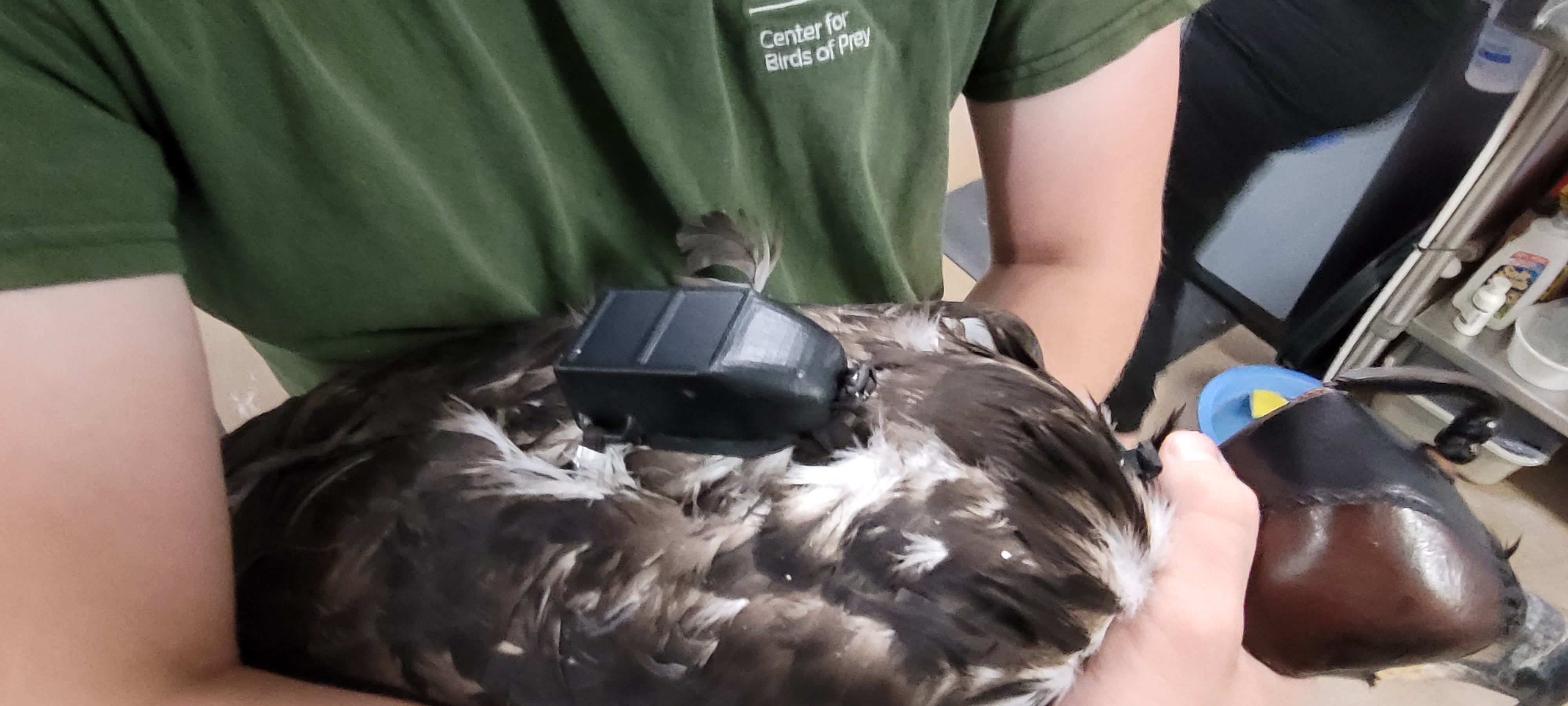
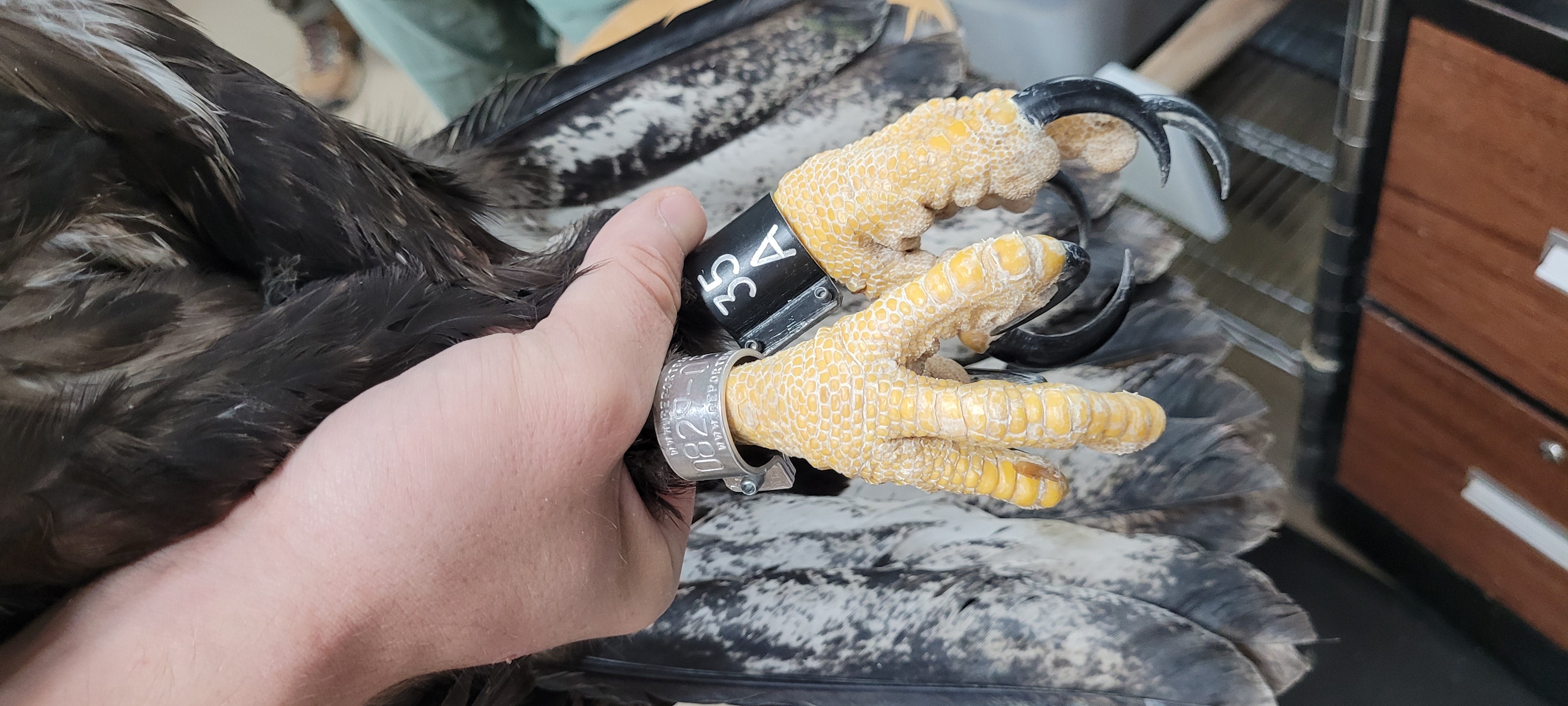
Bald Eagle patient 2025-0085 arrived at the Audubon Center for Birds of Prey's Raptor Trauma Clinic in February 2025 after falling from his nest on a power line tower as a chick. It was too dangerous to return him to the nest, so once he was cleared of injuries, the Center's team scheduled his release in an area with a large population of Bald Eagles that could act as a surrogate family as he learned to survive on his own. For release, the team fitted him with a light GPS backpack, a silver federal ID band on one leg, and a black ID band on his other leg, denoting he hatched from a nest on a human-made structure.
Because of the GPS tracker, we know exactly where 2025-0085 went after release: He began exploring Central Florida, heading farther west until reaching Honeymoon Island. From there, he embarked on his first migration up the Atlantic Flyway, settling in Quebec, Canada, for the summer. Without a GPS tracker, data collection like this would only be possible if he were spotted in each location, with his ID band visible and readable, and finders who felt motivated to report the sightings. With all this data at their fingertips, the Moreos looked forward to fall migration, when 2025-0085 would hopefully return to Florida.
Fall
Around Halloween, 2025-0085's tracking data showed him back in Florida, not far from where the Moreos live. Kathleen volunteers with Audubon's EagleWatch program, monitoring nests in Palm Beach County, and when she realized 2025-0085 flew to the same area as an EagleWatch-monitored nest, she kept an eye on the sky.
She found two juvenile Bald Eagles flying together over agricultural land surrounded by tall trees, one of which had leg bands. To match the telemetry data to the eagle before their eyes, the Moreos would need to either read the unique code on the bands or see the telemetry backpack. Without a professional camera, they zoomed in and hoped for the best.
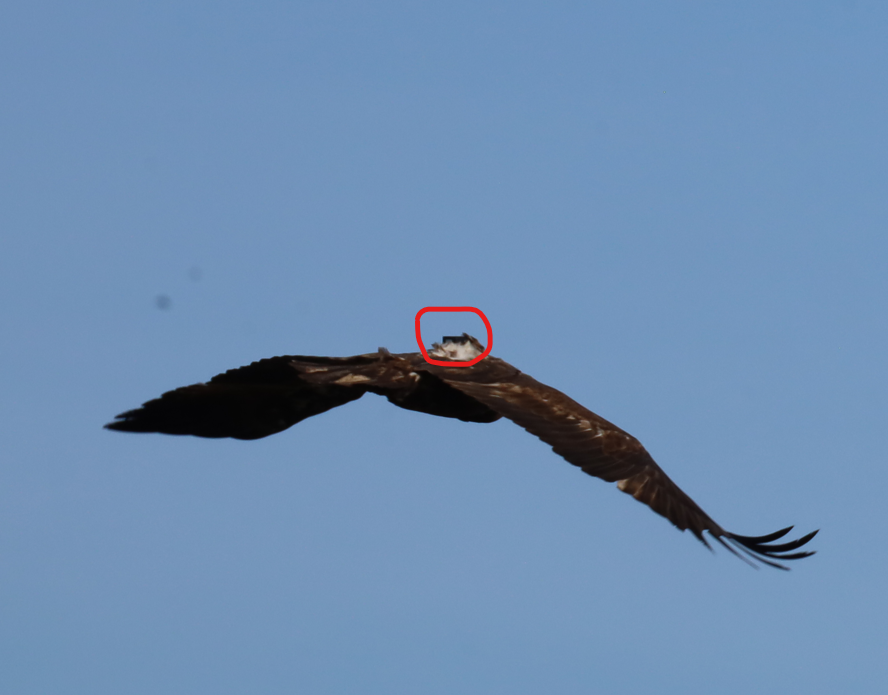
Sure enough, the photos they took confirmed 2025-0085! When zoomed in, a black box-shaped GPS tracker is unmistakable on the bird's back. Note: Never attempt to get close to Bald Eagles or follow them. They are protected by state and federal laws, and it is illegal to disturb them or their nests.
The Moreos' observation, guided by the data from the GPS tracker, provide an example of the life of an orphaned Bald Eagle in its early years. Eaglets typically leave the nest at around 10-12 weeks old, but they stay with their parents for several more weeks as they learn to hunt and practice flying. 2025-0085 embarked on his life in the wild without parental guidance, but the Moreos observed him with other eagles — a found family, just as we hoped he would find.
Juvenile Bald Eagles are known to be nomadic, unlike the predictable north-south migration of adults, but thanks to pings from 2025-0085’s tracker we know that he did follow a typical migration pattern this year. Not only that, but we also know that he returned to his home state with other Bald Eagles for nesting season, even though he will not be ready to nest until he reaches sexual maturity at around age five. With the Moreos’ sightings, we also know that he is traveling with a group, or at least one other juvenile — a common way that young eagles survive, giving them opportunities to learn from one another and even steal food from each other. It will be interesting to see how he spends his remaining years before he reaches breeding age.
Thanks to their support of this telemetry study, the Moreos got a rare look at a Bald Eagle’s life after rehabilitation and release, and scientists can use this data to inform advocacy and policy for years to come.
